How to test dozens of park versions before defending the concept
Parametric masterplanning lets the architect test a hundred or more park versions before one goes to review. Numbers, method, and the Akademgorodok case.
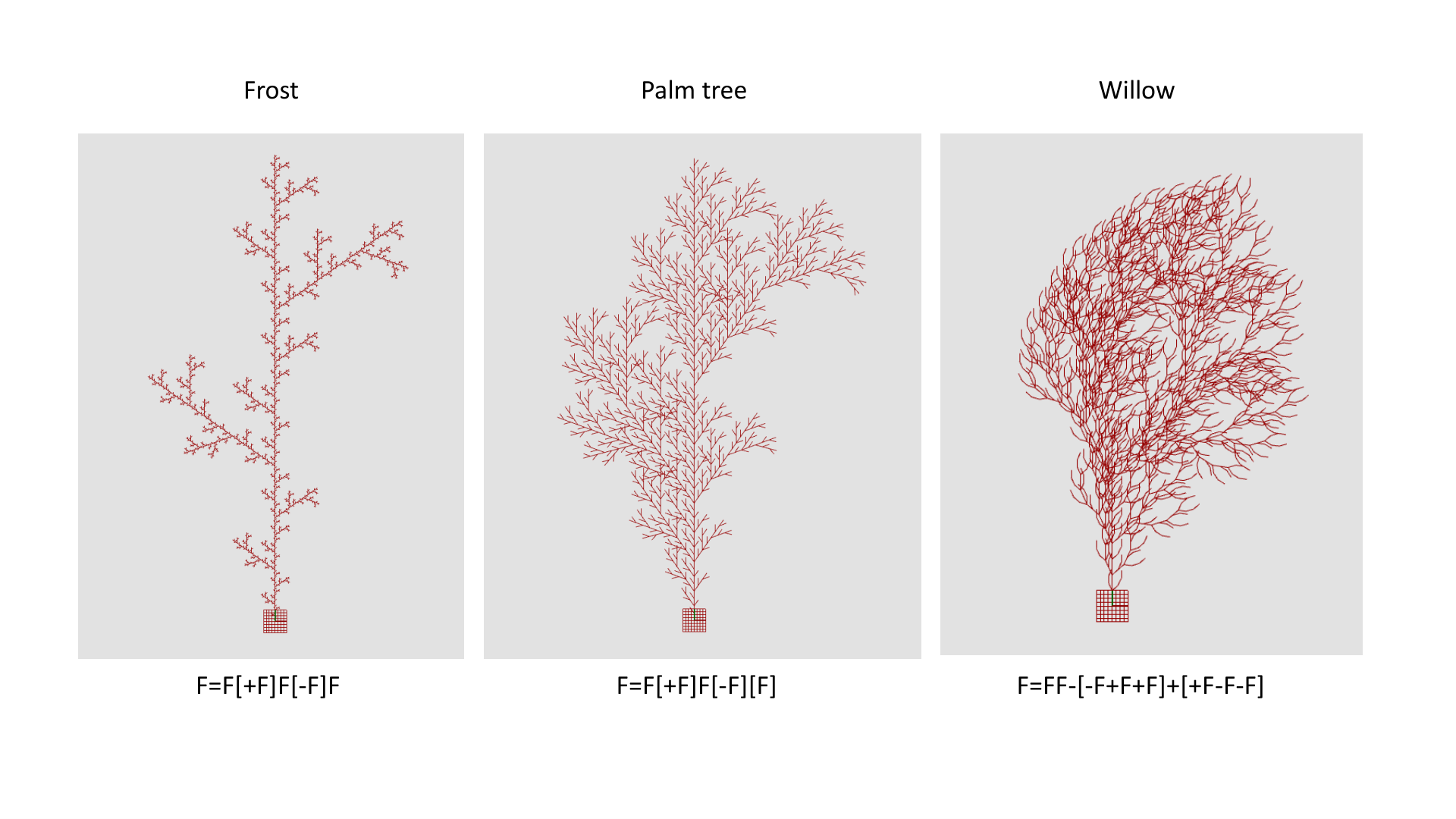
Parametric masterplanning lets an architect test dozens of park versions in the time it used to take to produce one. When every design decision is recorded as a rule (a formal grammar for paths, a tessellation for cells, a clustering algorithm for points), changing a single parameter recomputes the whole plan. At Novosibirsk Science Park (350,000 m², in partnership with Obermayer Gruppe Russia, serving the SKIF synchrotron[2]), Lex te Loo Architects compared six formal L-system grammars and several distribution-palette compositions before fixing a final version for the governor's presentation on 19 November 2024. The client received a defensible solution, chosen from many, rather than the first plan that came up.
Why testing many versions matters
A 35-hectare park concept holds hundreds of interlocking decisions: the placement of programme cells, the density of paths, the balance of open and enclosed spaces, the orientation of architectural anchors, seasonal flexibility. Each decision affects dozens of others. If the architect shows the client a first sketch without checking alternatives, one thing is guaranteed: the client sees a local optimum, not a global one. A parametric approach allows the team to generate variants automatically, score them against objective criteria, and select the version that answers the brief best. The client receives not "the architect's solution" but "a solution checked against alternatives." That is a difference a governor and a planning review notice immediately.
What counts as a version, parametrically
In a parametric method, a version is defined by a set of parameters. At Akademgorodok the parameters were: the L-system formal grammar for the path network (six candidates: Frost, Palm Tree, Willow, Akasia, Wheat, Grass); the type of programme-cell distribution (clustered, uniform, cluster-focused); branching density (third to fifth order); the rotation angle in the L-system rule (between 22.5 and 30 degrees); and the balance of garden types (the ratio of thematic, sports, wild, and infrastructural categories). Each combination of parameters produces a distinct plan. The minimum first-pass palette is six grammars times three distributions times three densities times two angles. That is one hundred and eight versions. Not a theoretical limit, but a baseline first-stage scan.
How long one iteration takes
At Akademgorodok one iteration (changing a parameter, recomputing the plan, exporting a visual) took fifteen to twenty minutes on a personal workstation. Without the parametric approach, the same iteration (redrawing the plan by hand, coordinating with the team, producing a fresh render) would take one to three working days. The compression by two orders of magnitude (hours to minutes) is the core saving of the method. In one working day a team can run twenty to thirty iterations, perform a preliminary selection, and prepare five or six full variants for internal review. Without automation the same volume of iterations would take six or seven weeks of expanded team work. The saved time does not go idle: it goes into deeper development of the chosen variant.
How the final version is selected
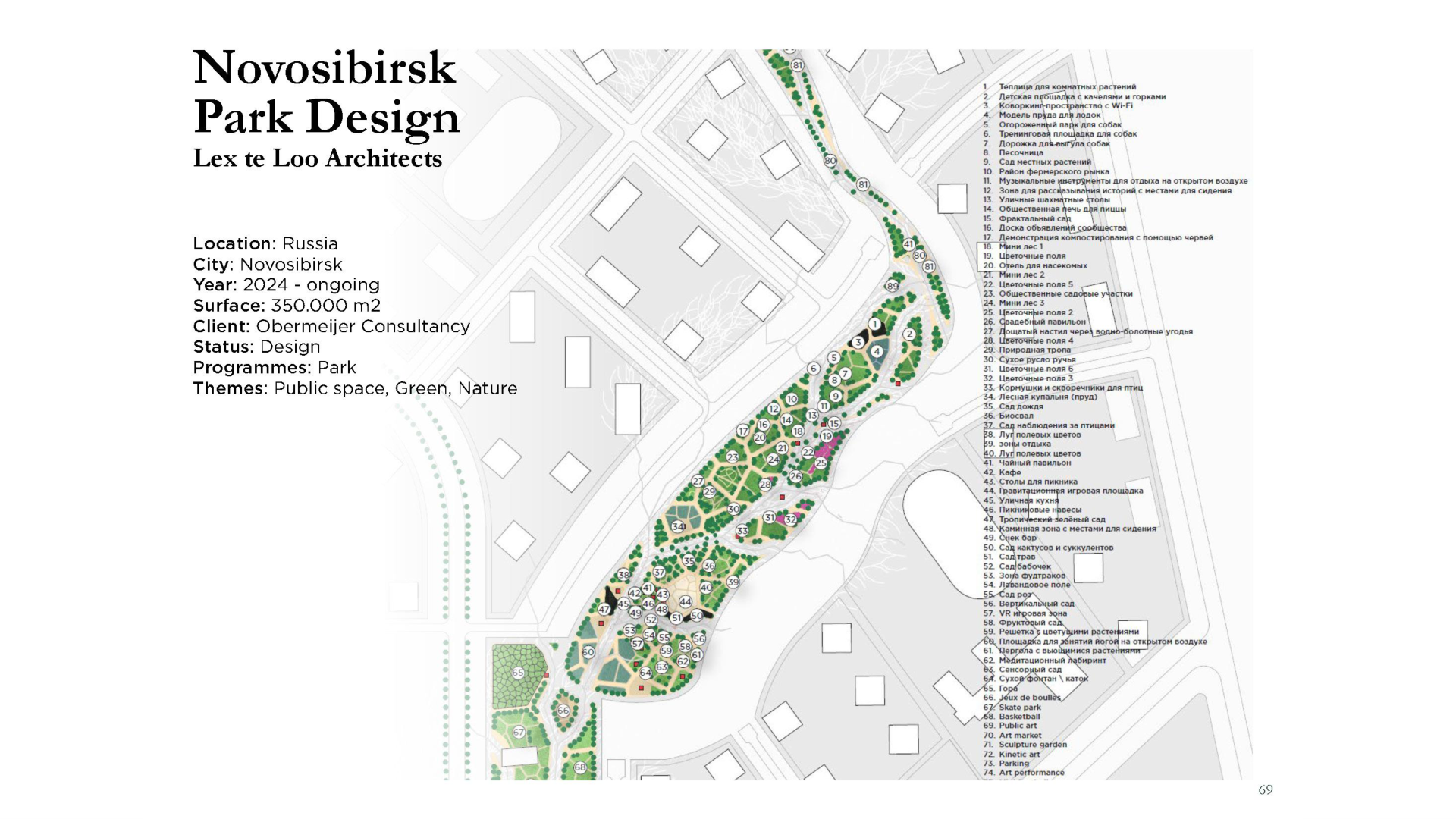
The final version is not chosen by aesthetic vote. The selection is formalised through criteria agreed with the client at brief stage. At Akademgorodok there were four criteria: branching density of the path network across 35 hectares; length of the main trunk relative to the linear geometry of the site; coverage of the 89 programme cells by third- and fourth-order twigs; and legibility of the final plan for presentation to the regional administration. Each of the 108 baseline versions received a score on the four criteria, and versions in the lower quartile were dropped automatically. From the upper quartile the bureau selected twelve variants for deeper review and six finalists for internal discussion. One of them was approved on 19 November 2024 in the governor's album. The client did not see a first sketch; the client saw the best of one hundred and eight checked alternatives.
Case: six grammars in two weeks
The selection chronology at Akademgorodok: the first week of November 2024 went into parametric generation of 108 versions across four criteria. The second week went into culling, choosing six finalists, and developing them to presentation quality. By 19 November 2024 the governor of the Novosibirsk region saw one plan, chosen from 108 tested alternatives, rather than the first sketch from the bureau's principal. The album received validation without revisions. The alternative scenario (one plan defended by intuition) typically requires two or three rounds of approval, and each round eats several weeks and a person-month of team capacity. Parametric iteration removes those rounds because it closes most of the questions before the first defence.
What the client gains
A parametric approach to iteration gives the client three practical wins. First: defensibility. The client can refer to specific criteria and to a specific number of alternatives tested, and that closes most of the standard questions from planning review and the public. Second: speed. The bureau goes from brief to a defensible concept plan in two or three months, instead of the standard six to nine. Third: economy. The cost of 108 iterations in a parametric environment is lower than the cost of one redraft after a failed first defence. The client pays for one passage instead of two or three.
In Lex te Loo Architects' practice, testing dozens of versions before defending the concept is the standard. The method rests on L-system formal grammars, introduced by Lindenmayer in 1968[1], Voronoi tessellation, and parametric optimisers. The same approach applies not only to parks but to resort masterplans, urban districts, and territorial projects. The headline practical result: a compression of the brief-to-defence cycle to a length within which the client can fit the project into a budget or political schedule.
Sources
1. Lindenmayer A., "Mathematical models for cellular interactions in development. I. Filaments with one-sided inputs", Journal of Theoretical Biology, 1968, vol. 18, no. 3, pp. 280–299. https://pubmed.ncbi.nlm.nih.gov/5659071/. Accessed 2026-05-04. The canonical 1968 paper introducing L-systems as a formal grammar for modelling cellular and plant growth.
2. Levichev E. (interviewed by Rogacheva A.), "Siberian Ring Source of Photons: A Universal Tool to Generate Scientific Knowledge", Scientific Russia, 6 April 2023. https://en.scientificrussia.ru/articles/siberian-ring-source-of-photons. Accessed 2026-05-04. Quoted: "SKIF will have the highest brightness among its 'classmates' — synchrotron radiation sources with an electron energy of up to 3 GeV."
Lex te Loo Architects is a Moscow-based architecture and urbanism office working at the concept and masterplanning stage. Lex te Loo holds an MArch (cum laude) from TU Delft, with exchange terms at ETH Zurich and at Sangath, the office of Prof. Balkrishna Doshi. He was a core team member at The Why Factory under Prof. Winy Maas (2017–2022), where he taught the Green Dip and Porosity master design studios and contributed to the books Le Grand Puzzle (Hatje Cantz, 2020) and PoroCity (nai010). The bureau uses parametric methods (L-systems, Voronoi tessellation, clustered point distribution) to test dozens of versions of a project at the early stage, raising defensibility and reducing the number of revisions. Current example: Novosibirsk Science Park (350,000 m², 2024+, in partnership with Obermayer Gruppe Russia).