Le Grand Puzzle: Manifesta 13 Marseille
Pre-biennial urban research for Manifesta 13 Marseille, with MVRDV and The Why Factory, 2018 to 2020. Three instruments — Maps, Model, Manifesto — applied to a city of 111 villages.
Le Grand Puzzle is the pre-biennial urban study for Manifesta 13 Marseille, produced by MVRDV and The Why Factory (TU Delft) between 2018 and 2020. Commissioned by the Manifesta Foundation under director Hedwig Fijen, the project mapped Marseille's urban contradictions through stakeholder interviews, comparative cartography, and 30 speculative urban interventions — all visualized by Lex te Loo as lead visualizer. The research culminated in a 336-page book with 700 color images (Hatje Cantz, 2020, ISBN 978-3-7757-4763-9), launched at the biennial opening alongside Marseille's Mayor Michèle Rubirola and Manifesta founder Hedwig Fijen.
The Question
Marseille is Europe's oldest city — a place founded by successive waves of Armenians, Italians, Spanish, North-African Jews, and French Algerian migrants, whose residents describe themselves as "nous sommes tous d'ici et d'ailleurs" (we are all from here and elsewhere). It is also a city of extreme contradictions: poverty alongside affluence, cultural richness alongside social fragmentation, Mediterranean beauty alongside urban decay, 111 villages that together form one metropolis yet rarely act as one.
Le Grand Puzzle does not attempt to resolve these contradictions. It maps them, visualizes them, and proposes 30 spatial interventions that work with the contradictions rather than against them. The title is the method: Marseille as a grand puzzle — a mosaic where every fragment has its own logic, and the task of the urbanist is to reveal the image that emerges when the fragments are seen together.
Methodology
The research followed a seven-chapter structure, each chapter named with the letter M — a structure that runs through the book, the workshops, and the biennial itself.
Marseille Manual: From Puzzle to Mosaic
Winy Maas's framing essay. Sets up the intellectual architecture: Marseille as a city where contradictions are not problems to solve but conditions to work with. The manual establishes the comparative framework that underpins the entire study.
Marseille Moments: 49 Stakeholder Interviews
The research team conducted interviews with 49 stakeholders across Marseille's diverse sectors — urbanism, culture, politics, community life, education, maritime industry. 19 interviews were published in the book; 30 additional interviews informed the analysis without being reproduced in full. The interviewees range from the head of Marseille's chamber of commerce to community leaders in the northern arrondissements, from cultural directors to port officials. This is not desk research — it is grounded in the voices of people who make the city work.
Marseille Maps: Comparative Cartography
Extensive mapping comparing Marseille with other European port cities across demographic, infrastructural, cultural, and economic dimensions. Produced by the Why Factory team — Javier Arpa Fernández, Adrien Ravon, and Lex te Loo — in collaboration with the MVRDV urban research team. The maps reveal what statistics alone cannot: where the city's energy concentrates, where it fractures, and where the potential lies dormant.
Marseille Miracles: 30 Urban Interventions
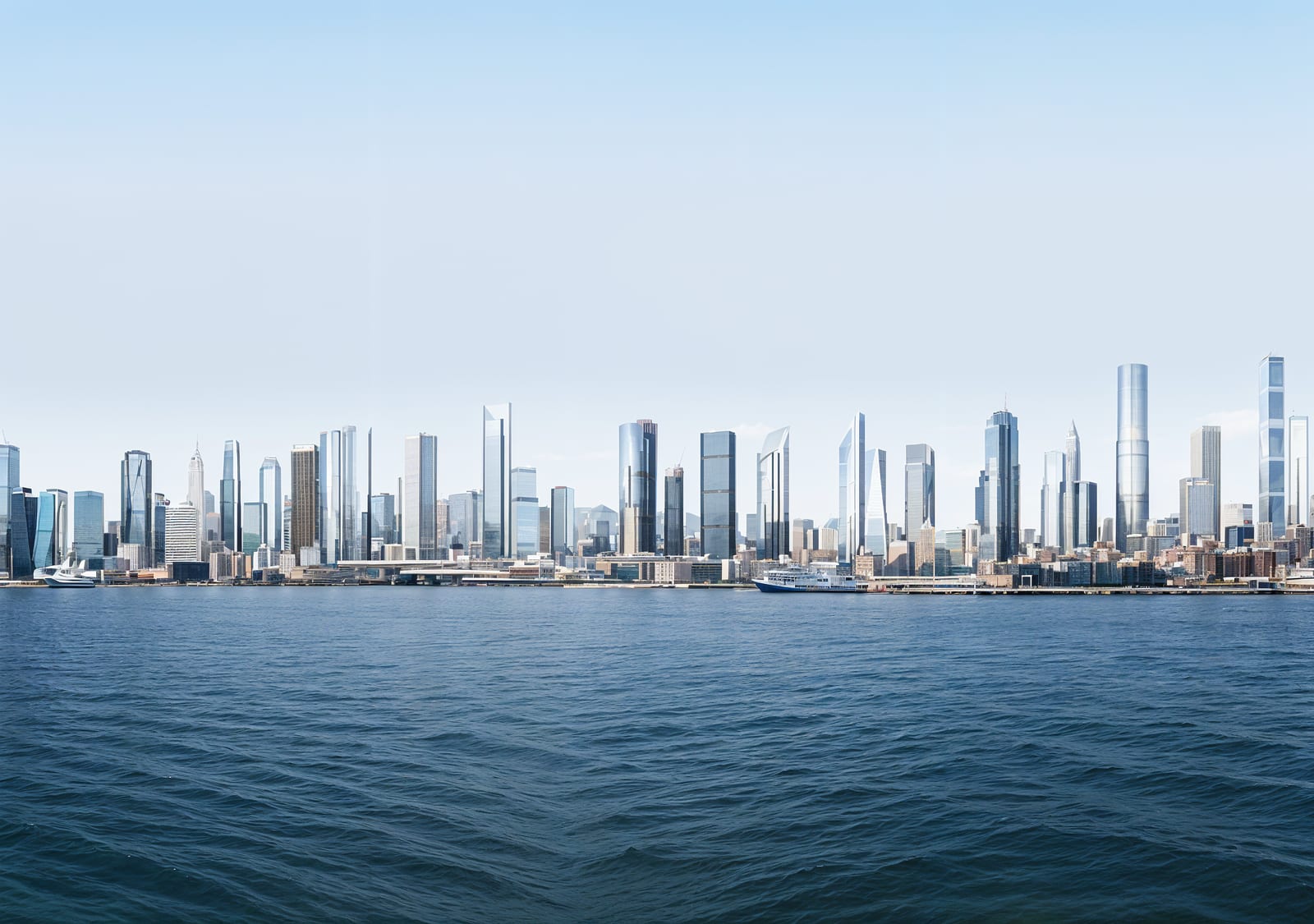
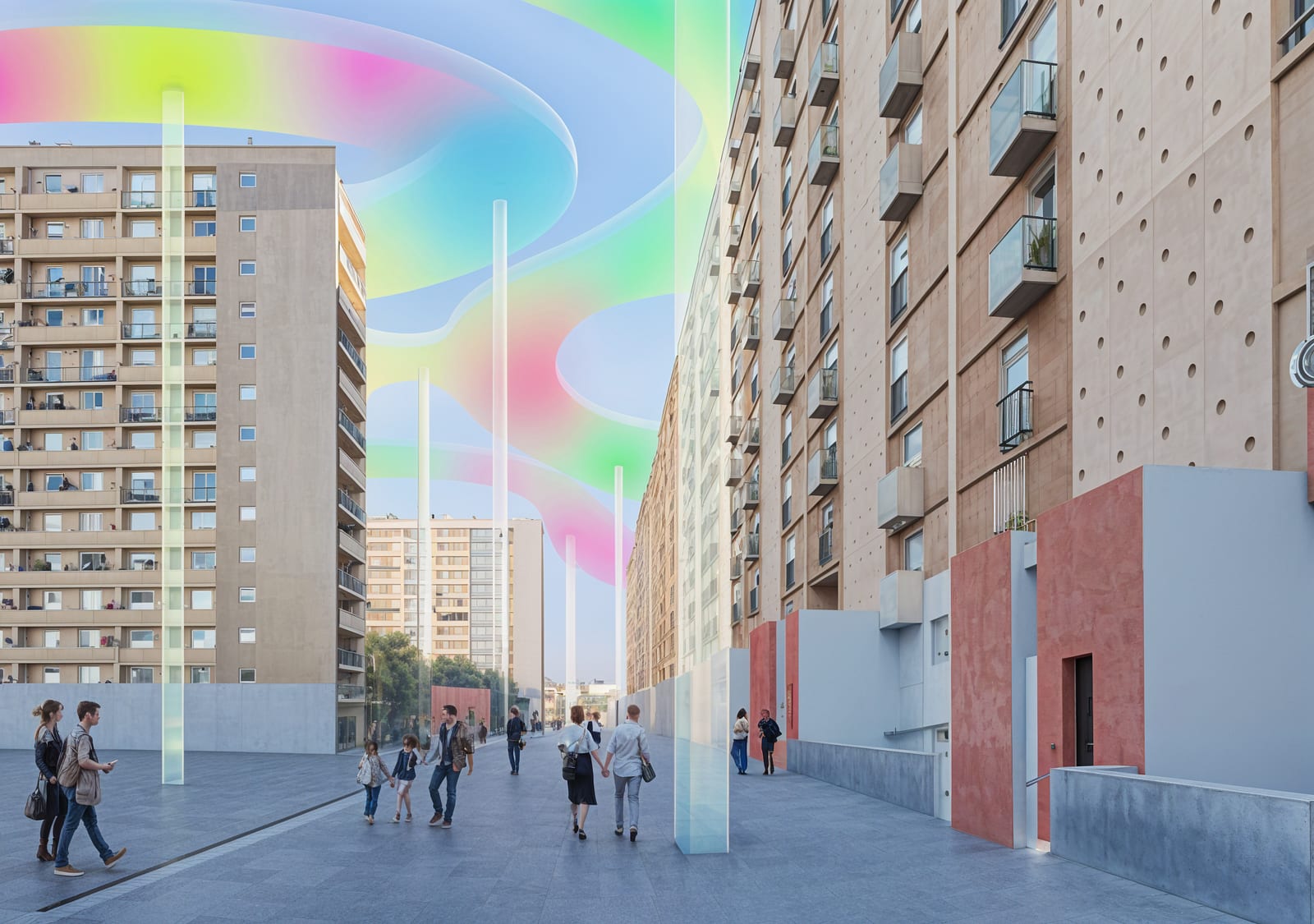
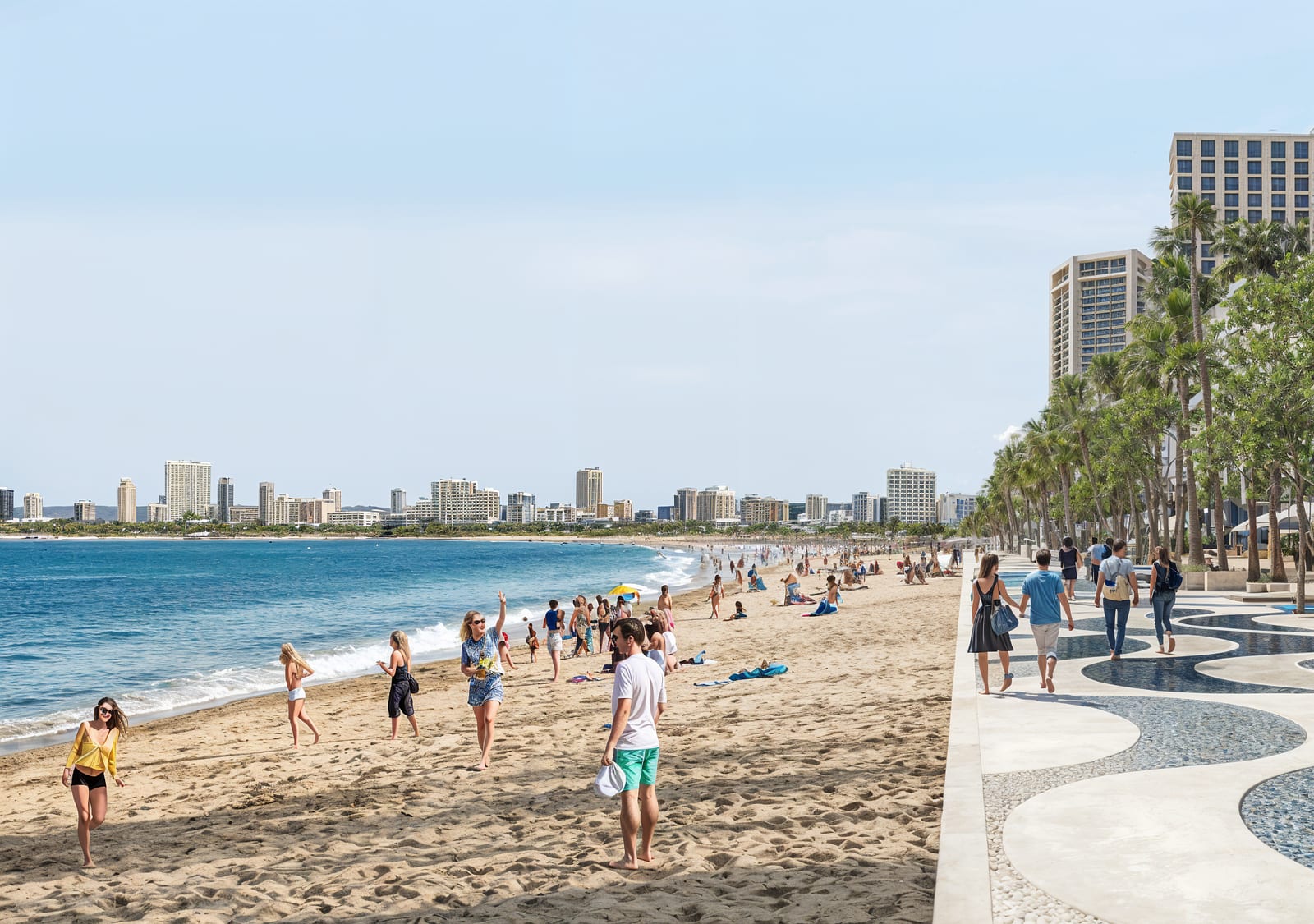
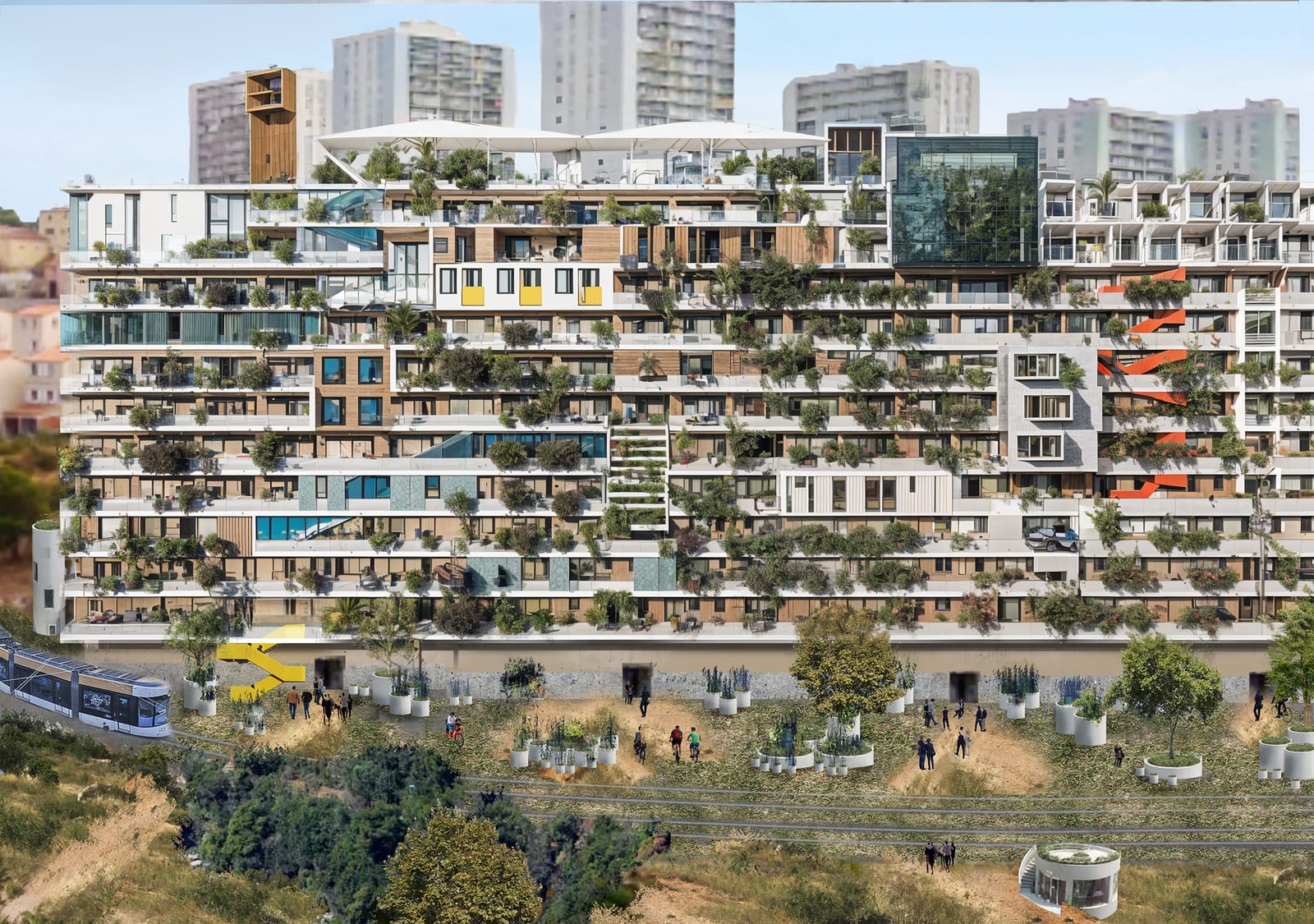
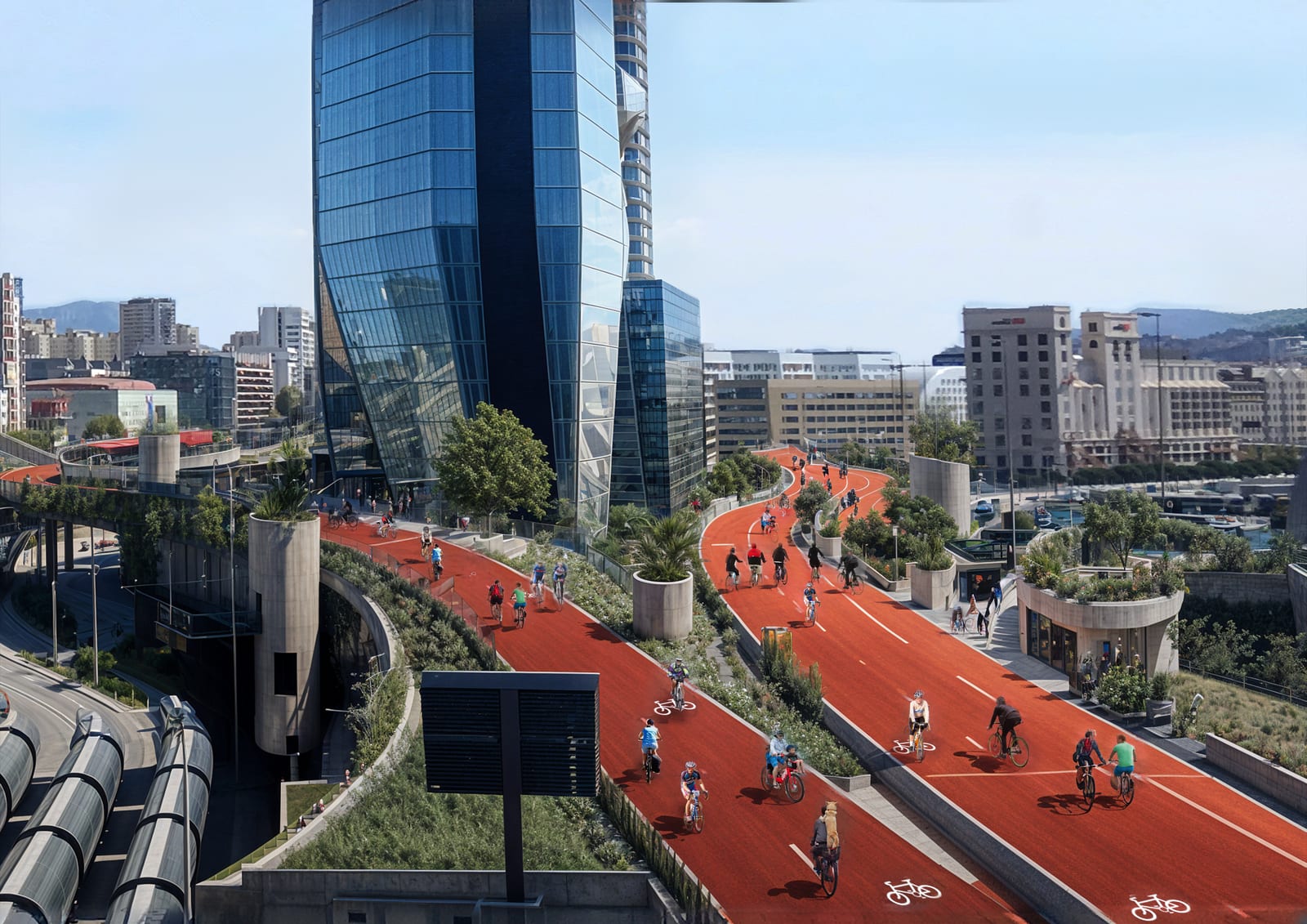
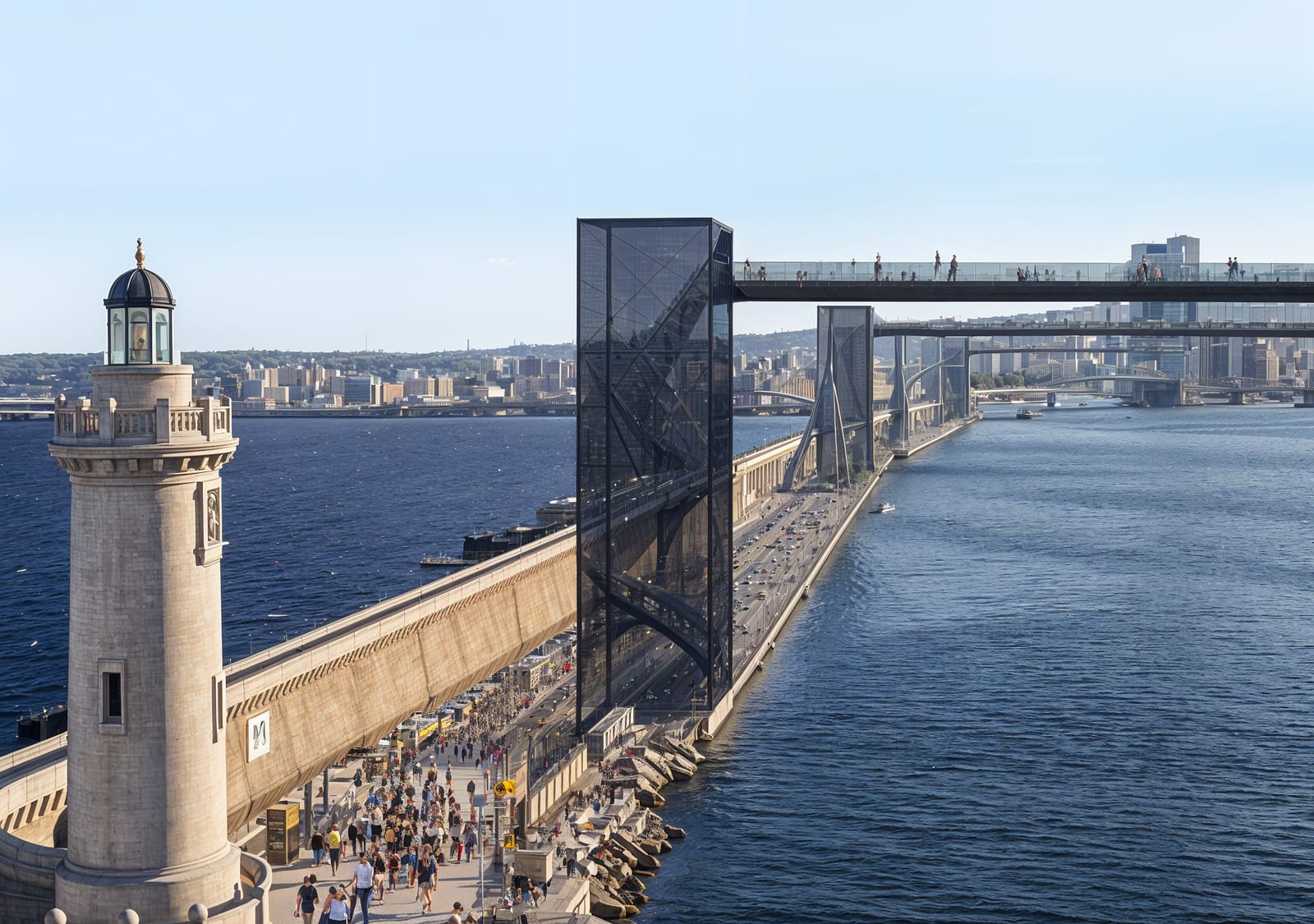
The heart of the project. 30 speculative urban proposals developed through the November 2018 workshop and refined by the core team. Each intervention is presented as a before/after photomontage — a real location in Marseille transformed by a single spatial proposition. From "A Bridge to Algiers" (a symbolic connection between Marseille and North Africa) to "1000 Hikes" (a network of urban trails connecting the 111 villages), each proposal addresses a specific urban condition with a specific spatial response. All 30 visualizations were produced by Lex te Loo with Adrien Ravon, assisted by Ton van Giessen.
Marseille Motion: Citizen Engagement
Le Tour de Tous les Possibles — a parallel citizen engagement program designed by Joke Quintens (Wetopia) and Tarik Ghezali (La Fabrique du Nous). 22 workshops engaged approximately 500 Marseille residents from diverse social and cultural backgrounds. The program proposed a permanent Assemblée de Tous les Possibles: a 101-member citizens' assembly selected by lottery to advise the Mayor and City Council. As the organizers stated: "The population of Marseille has, and is, the solution."
The Workshop: 1000 Visions de Marseille
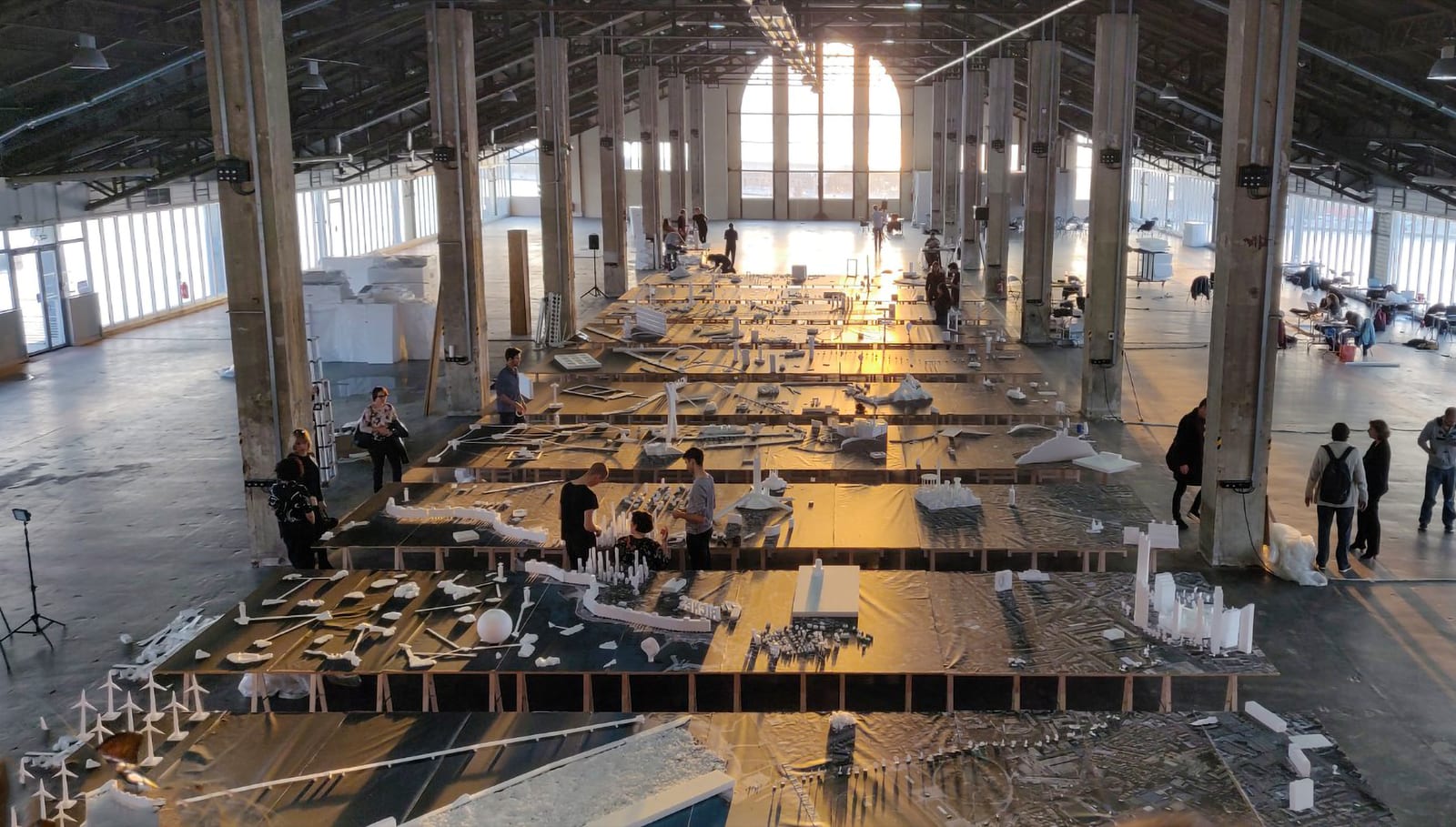
The foundational design event of the project: an intensive week-long workshop held November 8–13, 2018 at the J1 warehouse on the Marseille waterfront. Approximately 80 students from three universities participated under the direction of the Why Factory academic team:
- ~40 students from TU Delft, Faculty of Architecture (The Why Factory)
- ~20 students from ENSA-Marseille (École nationale supérieure d'architecture)
- ~15 students from ESADMM (Les Beaux-Arts de Marseille)
Workshop leaders: Adrien Ravon, Javier Arpa Fernández, and Lex te Loo. The week culminated in the construction of a 25 × 9 meter physical model of Marseille, presented to city officials and cultural leaders. The student proposals generated the core material for the 30 "Marseille Miracles" urban interventions that form the book's most iconic chapter.
The 30 Interventions
Each visualized as a before/after photomontage by Lex te Loo with Adrien Ravon. The interventions span infrastructure, landscape, public space, mobility, housing, culture, and identity:
- The 111 Villages — Strengthening Marseille's identity as 111 distinct villages
- Occupy the Quarries — Reactivating abandoned quarry landscapes
- M A R S E I L L E is — Identity signage and branding intervention
- Halos — Atmospheric lighting installations marking public gathering points
- Typology Boost — Intensifying existing building typologies
- 111 Metros — Metro network expansion connecting all 111 villages
- Copacabana-Marseille — Transforming the coastline with beach culture infrastructure
- Vertical Coastline — Vertical development along the coastal edge
- Pools in the Port — Swimming pools inserted into the working harbour
- Biking Marseille — City-wide cycling infrastructure
- Open the Dike — Opening the coastal dike for public access and activity
- Urban Calanques — Bringing the calanque landscape into the city fabric
- Welcome — Redesigned gateway and arrival experiences
- A Green Avenue — Radical greening of a major boulevard
- Super Zebra — Oversized pedestrian crossings as public space
- The Cloud — Canopy and shade structures for Mediterranean climate
- Connect the MUCEM — Improved connections to the Museum of European and Mediterranean Civilisations
- A Bridge to Algiers — Symbolic connection between Marseille and North Africa
- The Elevated Plaza — Raised public squares reclaiming infrastructure rooftops
- The Colossus — Monumental landmark structure
- Vieux Port Plage — Beach at the Old Port
- Double La Plaine — Doubling the capacity of Place Jean Jaurès
- Urban Shortcuts — Pedestrian shortcut networks through Marseille's hilly terrain
- No More Dead Ends — Eliminating cul-de-sacs for better urban connectivity
- Skyline de la Garde — Skyline enhancements around Notre-Dame de la Garde
- The Mount — Artificial hill and landscape structure
- The Stadium Towers — Mixed-use towers around the Stade Vélodrome
- Vertical Villas — Stacked Mediterranean villa typologies
- Open the Gate — Opening gated and closed spaces to the public realm
- 1000 Hikes — Network of urban hiking trails connecting the 111 villages
Publication
Book
Manifesta 13 Marseille: Le Grand Puzzle. Published by Hatje Cantz Verlag, Berlin, 2020. 336 pages, 700 color images, softcover. English edition ISBN 978-3-7757-4763-9; French edition ISBN 978-3-7757-4764-6. Text by Hedwig Fijen and Winy Maas. Edited by Javier Arpa Fernández. Visualizations by Lex te Loo with Adrien Ravon, assisted by Ton van Giessen. Generously supported by Club Immobilier Marseille Provence and the Embassy of the Kingdom of The Netherlands, France.
The book launch took place on August 29, 2020 at the opening of Manifesta 13, with a panel featuring Winy Maas, Mayor Michèle Rubirola, Deputy Mayor Jean-Marc Coppola, and Hedwig Fijen, moderated by Tarik Ghezali. Currently out of stock.
Film
A manifesto video by Winy Maas was produced alongside the book, presenting the research framework and the case for spatial optimism in Marseille. Animated sequences were also created for each of the 30 interventions, showing the before/after transformation — used in the biennial presentation and the exhibition at J1.
Manifesta 13 — Context
Manifesta is Europe's nomadic biennial of contemporary art, founded in the early 1990s in the post-Cold War period by Dutch art historian Hedwig Fijen. Each edition is hosted by a different European city. Manifesta 13 took Marseille as its host — originally planned for June–November 2020 but rescheduled to August 28 – November 29, 2020 due to the COVID-19 pandemic. The biennial theme was "Traits d'union.s" (Traits of Union / Connecting Lines), curated by creative mediators Alya Sebti, Katerina Chuchalina, and Stefan Kalmar.
Le Grand Puzzle was not one of many art projects within Manifesta 13 — it was the commissioned pre-biennial urban research framework that provided the spatial, social, and cultural analysis upon which the entire biennial was built. As Winy Maas described it: "Le Grand Puzzle shows the incredible urban possibilities and impossibilities of Marseille, through conversations, analyses, maps and ideas — forming a constructive mirror to Marseille."
Collaborating Institutions
- MVRDV — Lead architectural office, co-producer (Rotterdam)
- The Why Factory, TU Delft — Academic research partner, co-producer (Delft)
- Manifesta Foundation — Commissioner and initiator (Amsterdam)
- ENSA-Marseille — Workshop partner, 20 students + 5 faculty (Marseille)
- ESADMM / Les Beaux-Arts de Marseille — Workshop partner, 15 students + 5 faculty (Marseille)
- Hatje Cantz Verlag — Publisher (Berlin)
- Embassy of the Kingdom of The Netherlands — Book sponsor (Paris)
Role of Lex te Loo
Lex te Loo served as Teacher/Researcher in the core Why Factory academic team and holds the most prominent production credit in the published book: lead visualizer for all 30 urban intervention photomontages.
Verified credits from the published Hatje Cantz colophon:
- Lead visualizer: "Visualisations: Lex te Loo with Adrien Ravon, assisted by Ton van Giessen" — every before/after intervention image in the book was produced under his lead
- Core academic team (Chapter 5, Marseille Miracles): "Winy Maas with Javier Arpa Fernandez, Adrien Ravon and Lex te Loo"
- Marseille Maps team (Chapter 4): Listed alongside Arpa and Ravon
- Workshop co-leader (November 2018): Co-directed ~80 students across 3 universities at J1 Marseille
- Design Luminy documentation: Named as one of three workshop leaders
Citations and References
- MVRDV — Le Grand Puzzle announcement
- MVRDV — Initial collaboration announcement (April 2018)
- Manifesta.org — Pre-biennial urban study page
- D.A.P. / Artbook — Le Grand Puzzle book listing
- TU Delft research portal — Le Grand Puzzle
- Design Luminy — 1000 Visions de Marseille workshop
- Design Luminy — Why Factory workshop results
- ArchDaily — MVRDV and The Why Factory develop a future Grand Puzzle of Marseille
- Hatje Cantz e-book preview — colophon with full credits